Last updated: August 2026
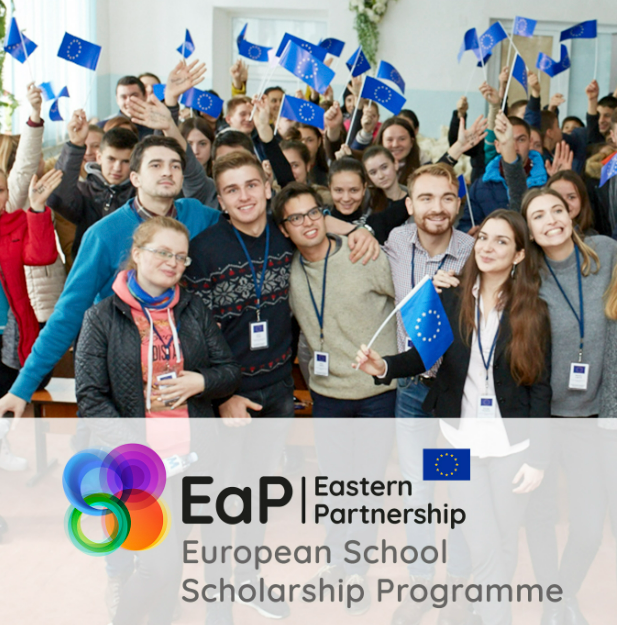
If you’re a 16-or-17-year-old from one of the EU’s six Eastern Partnership countries and you want a genuinely free, world-class secondary education, the Eastern Partnership European School in Tbilisi is one of the best-kept secrets in the region. Funded entirely by the European Union and delivered through the New School — International School of Georgia, it hands out a small number of full scholarships each cycle for a two-year International Baccalaureate (IB) Diploma with a European Studies focus. No tuition. No boarding fees. Full medical insurance included.
Here’s everything you need to know about the program, what it actually covers, and how the application process works.
A quick note on timing before you read on: this scholarship runs on a competitive cycle, and the most recently confirmed intake was the 2025/2027 cohort, whose applications closed on 15 April 2025. At the time of writing, a new call for a 2026/2027 or 2027/2029 cohort had not yet been published on the program’s official channels. The structure and eligibility rules below reflect how the program has consistently run since 2018 — but always confirm the live deadline through the official EU NEIGHBOURS east portal or the New School Georgia website before you start preparing documents, since a new call could open at any time and application windows tend to be short.
Top 15 Fully Funded Scholarships in Europe for International Students (2026)
What Is the Eastern Partnership European School?
Launched in 2018 in partnership with the European Union, the Eastern Partnership European School Programme was created to give talented secondary students from the EU’s six Eastern Partnership countries — Armenia, Azerbaijan, Belarus, Georgia, the Republic of Moldova, and Ukraine — access to a European-focused, internationally recognized education. The program is delivered at the New School — International School of Georgia in Tbilisi, an IB World School authorized since 2010.
Rather than a standard national curriculum, scholarship recipients follow a two-year IB Diploma Programme with a European Studies focus, combining the academic rigor of the IB with specialized content on European history, languages, literature, and EU affairs. Since the program launched, well over 100 students from across the region have received the scholarship.
Who Can Apply?
Eligibility has stayed consistent across previous cycles:
- Nationality: You must be a citizen and resident of one of the six Eastern Partnership countries — Armenia, Azerbaijan, Belarus, Georgia, the Republic of Moldova, or Ukraine.
- Age: Typically 16–17 years old as of 1 September of the intake year (the exact cutoff is confirmed in each new call).
- Current enrollment: You need to be enrolled in a secondary school in one of the six eligible countries at the time you apply.
- Language readiness: Since instruction and testing are conducted in English, a solid working level of English is essential — the written entrance tests are administered in English via an online platform.
What Does the Scholarship Actually Cover?
This is a genuinely full scholarship — one of the most comprehensive on offer for secondary students in the region. Recipients get:
- Full tuition fees for the two-year IB Diploma Programme
- Boarding and meals at the school’s facilities in Tbilisi for students from outside the city
- Round-trip travel between Tbilisi and the student’s family residence during school breaks
- Local transportation allowance in Tbilisi
- Full medical insurance for the duration of the program
- Study materials and resources, including books and technology needed for coursework
- Educational tours and extracurricular access, including EU-sponsored seminars and conferences on European affairs
The scholarship is awarded for the first year and is automatically extended into the second year, provided the student successfully completes year one — there’s no need to reapply for continued funding.
How the Selection Process Works
Applications go through a three-stage, merit-based selection process:
- Online application submission through the program’s official application portal, during the open call window.
- Written entrance tests in maths and English, administered online, for shortlisted candidates.
- Interview, typically conducted via video call, where the selection panel assesses academic potential alongside motivation, openness to other cultures, and genuine interest in European affairs.
Selection is carried out by a qualified panel using standardized, transparent scoring criteria, and panel decisions are generally final. Because the number of scholarships each cycle is limited — historically ranging from roughly 20 to 40 places, depending on the cycle — competition is real, and strong academic performance plus a clear, genuine motivation for the European Studies focus meaningfully improve your chances.
Documents and Preparation
While exact document checklists are published fresh with each call, past cycles have generally required:
- A completed online application form
- Academic records / transcripts from current secondary school
- Proof of citizenship and residency in an eligible country
- A statement of motivation
- Contact and consent information (given the applicant age, parental or guardian involvement is typically required)
Application guidance has historically been made available in multiple regional languages — including Armenian, Azerbaijani, Belarusian, English, Georgian, Romanian, Russian, and Ukrainian — to make the process accessible across all six eligible countries.
Why This Scholarship Stands Out
For a secondary-level program, the combination on offer here is unusual:
- A genuinely internationally recognized qualification — the IB Diploma is accepted by universities in well over 100 countries.
- Full-cost coverage, including boarding, meals, travel, and insurance — not just tuition.
- A built-in European Studies specialization, useful for students aiming at university study in Europe or careers connected to EU affairs.
- Automatic second-year continuation, removing the stress of reapplying mid-program.
Frequently Asked Questions
Is there an application fee? No. The application process for this scholarship has consistently been free of charge.
Do I need to already speak French or another EU language to apply? No — the program is delivered and tested in English. Additional European language study is part of the European Studies curriculum itself, not a prerequisite for applying.
What happens after the two-year IB Diploma? Graduates receive an internationally recognized IB Diploma, which past cohorts have used as a pathway into universities across Europe and beyond — the program is explicitly positioned as a stepping stone to international higher education.
How many scholarships are usually available? The number has varied by cycle, generally ranging from around 20 to 40 places. The exact number is confirmed in each new call for applications.
Where should I go to check if a new call is open? Go directly to the EU NEIGHBOURS east website or the New School Georgia website. Be cautious with search results for this program — always verify you’re on an official EU or New School Georgia domain before submitting any personal information, since scholarship programs like this one are sometimes impersonated by unrelated or fraudulent websites.
This guide summarizes publicly available information on the EU-funded Eastern Partnership European School Programme. Exact eligibility cutoffs, scholarship numbers, and deadlines are confirmed fresh with each new call for applications — always verify current details through official EU or New School Georgia channels before applying.